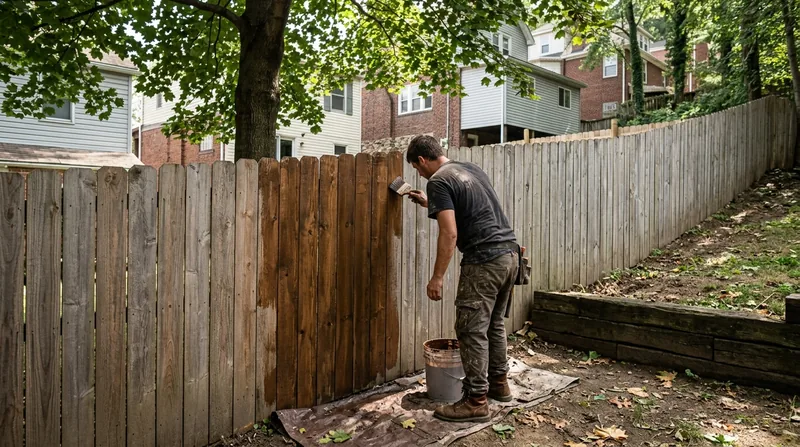




Pittsburgh's humid summers and freeze-thaw winters are relentless on wood fence finish. A fence staining in Pittsburgh protects your investment and keeps the grain visible through another cycle of weather. We clean, brighten, and reseal wood privacy and picket runs so they hold up to the seasonal extremes that wear down unfinished surfaces fast. The rowhouse and twin-home stock that defines the city leaves little room for error: fences run property lines inches from neighbors' windows, share masonry walls, and sit in narrow side yards where water pools and finish fails first. Proper sealing extends the life of a wood fence by years and costs far less than replacing boards or entire runs. We work across Pittsburgh and the surrounding boroughs to restore fences that have grayed, checked, or started to splinter.
Why Wood Fence Finish Fails Fast in Pittsburgh's Climate
The Pittsburgh region sits in a zone where ground freeze-thaw cycles and humid summers conspire to strip finish from wood. Water penetrates the grain, swells the wood in spring, and shrinks it in autumn, opening checks and cracks where more water gets in. Unfinished or poorly sealed wood turns gray within a year or two, and the grain starts to splinter. This is not cosmetic damage: exposed wood absorbs moisture year-round and becomes soft at the ground line, where rot begins. A properly finished wood privacy fence resists this cycle and stays sound.
- Unfinished wood absorbs water and loses structural integrity at the post base and rail joints.
- Gray, weathered wood signals that the protective seal has failed and the grain is exposed to UV and moisture damage.
- Checking and splintering make the fence unsafe for bare feet and hands, and signal deeper water intrusion.
- Sealed wood resists rot and maintains its color and smooth surface through multiple seasons of thaw and freeze.
Catching the fence before the wood softens at the ground line is the difference between a restoration and a board replacement.
Key info: In Pittsburgh's neighborhoods like Baldwin, Dormont, and Brentwood, wood fences that are sealed every 2 to 3 years hold up through multiple freeze-thaw cycles. Unfinished wood fails in half that time. The investment in sealing pays for itself when it prevents the cost of replacing rotted posts or boards.
For more on the lifespan and care of wood fences, see our guide to fence repair in Pittsburgh.
How We Clean, Brighten, and Seal Your Fence
Our process restores the wood to bare grain, then applies a penetrating seal that lets the wood breathe while blocking water. We do not paint: paint traps moisture and peels in patches, especially in tight corners and where boards meet rails. Stain and sealer soak in, flex with the wood, and last longer. The work is labor-intensive, but the result is a fence that looks new and will stay sound for years.
- We pressure wash the fence to remove dirt, algae, and loose finish without splintering the grain or gouging the wood.
- We apply a wood brightener to restore the natural color and open the grain for sealer absorption.
- We sand rough areas and check the wood for soft spots or rot that need repair or board replacement before sealing.
- We apply a penetrating exterior stain and sealer rated for the freeze-thaw cycle and UV exposure in Pennsylvania.
- We work from the top down so drips and runs flow naturally and the finish dries even across the fence face and rails.
The entire job typically takes 2 to 3 days for a standard residential run, depending on the linear footage and the condition of the wood.
Example: A homeowner in Wilkinsburg had a 120-linear-foot cedar privacy fence that had grayed and started to splinter. We cleaned, brightened, and sealed it in 2 days. The wood returned to its natural color, and the fence will resist moisture and UV for 3 to 4 years before another seal becomes necessary. Cost was within budget because we did not need to replace any boards.
If your fence has rotted posts or damaged boards, we can address those during the restoration. See fence post repair and replacement for details.
Staining, Sealing, and Painting: What Works in Pittsburgh
| Approach | Description | Best for |
|---|---|---|
| Penetrating stain and sealer | Soaks into the wood and flexes with seasonal movement. Does not peel or chip. Breathes so water vapor escapes. | Wood privacy fences in Pittsburgh where freeze-thaw and moisture are constant. Lasts 3 to 4 years. |
| Solid-color deck stain | Hides the grain but still penetrates. Thicker than transparent stain, blocks more UV. May show wear at joints and edges. | Fences that are heavily weathered or where a uniform color is desired. Lasts 2 to 3 years in Pittsburgh climate. |
| Latex or acrylic paint | Forms a film on the surface. Traps moisture and peels in patches, especially in tight corners. Requires scraping and repainting every 2 to 3 years. | Rarely recommended for wood fences in Pittsburgh because of maintenance burden and peeling. Better for trim and gates. |
| Clear sealer with no pigment | Protects the wood but offers no UV protection. Wood still grays and weathers. Good for cedar where the natural color is the goal. | Homeowners who want to see the wood grain and accept the weathered look. Lasts 1 to 2 years before reapplication. |
We recommend a penetrating stain with UV protection for most wood fences in Pittsburgh because it balances durability, appearance, and ease of maintenance.
Fence Staining and Restoration Cost in Pittsburgh: What to Expect
The cost of fence staining and restoration depends on the linear footage, the current condition of the wood, and whether boards or posts need replacement. A standard residential run of 100 to 150 linear feet starts at $1,050 to $1,500 for cleaning, brightening, and sealing. Larger runs or fences in poor condition cost more. We charge by the linear foot and provide a detailed estimate before we start work.
- Pressure washing and brightening typically cost between $6 and $10 per linear foot, depending on how much dirt and algae must be removed.
- Sanding and repair of soft spots or splinters adds to the labor but prevents the need for board replacement later.
- Stain and sealer application costs between $4 and $8 per linear foot for a quality exterior product rated for Pennsylvania freeze-thaw cycles.
- Board or post replacement, if needed, is quoted separately and can range from $50 to $150 per board depending on species and location.
- Access and site conditions matter: a fence in a narrow alley or behind a tight rowhouse costs more to reach and protect from overspray.
The best way to know the exact cost is to call us for a free estimate. We inspect the fence, discuss your goals, and provide a number that covers labor, materials, and cleanup.
Real example: A homeowner in Green Tree had a 140-linear-foot pressure-treated privacy fence that had grayed and had soft spots near the base of two posts. We quoted $1,820 for cleaning, brightening, sanding, replacing two boards, and sealing the entire run. The job took 3 days. Without the sealing and repair, the fence would have needed full replacement within 2 years at a cost of $4,200 or more.
For detailed pricing and to understand what factors affect the total, visit our pricing page or call (412) 754-7811 for a free estimate.
What to Look for When Hiring a Fence Staining Professional Near Me in Pittsburgh
Choosing the right contractor for fence staining and restoration matters because poor technique or low-quality sealer will fail in a year or two, leaving you to repeat the work. Look for a company that has been in business locally, carries full insurance, and can explain why they use the products they do. Pennsylvania has no state license for fence work, but general liability and workers compensation insurance are standard. Ask for a certificate of insurance before the work begins, and get multiple estimates so you understand what is included at each price point.
- Verify that the contractor carries general liability and workers compensation insurance and can provide a current certificate on request.
- Ask how long they have been in business and request references from recent jobs in your neighborhood.
- Understand the product: a quality exterior stain rated for Pennsylvania weather costs more than a generic deck stain, and the difference shows up in durability.
- Confirm that the estimate includes pressure washing, brightening, repair of soft spots, and the cost of sealer and labor.
- Get at least two estimates so you can compare methods, materials, and price before committing.
- Check whether your HOA or deed restrictions govern fence color or finish: some communities require approval before staining or resealing.
We have been in business since 2012 and are an AFA Member Installer with the American Fence Association. We work across Pittsburgh and the surrounding boroughs, and we are happy to provide references and a free estimate.
Ready to get started? Contact us for a free estimate or call (412) 754-7811 to discuss your fence and what restoration will cost.
Fence Staining & Restoration in Pittsburgh: Pricing Guide
| Service | Price | Details |
|---|---|---|
| Residential wood fence staining and sealing | Starting at $1,050 | Cleaning, brightening, and penetrating sealer for 100 to 150 linear feet of standard residential run |
| Pressure washing and brightening only | Starting at $600 | Restoration of color and grain without sealer, for homeowners who want to apply their own finish or assess damage first |
| Board or post replacement during restoration | $50 to $150 per board | Pressure-treated pine, cedar, or composite board replacement identified during cleaning, before sealing the entire run |
| Large runs or complex access | On estimate | Fences over 200 linear feet, in tight alleys, or with multiple access obstacles require a site visit and detailed quote |
| Travel and site preparation | Included | No separate mileage or call-out fee within Pittsburgh and surrounding service areas |
| Free estimate | No obligation | Response within 24 hours at (412) 754-7811, includes site inspection and detailed scope of work |
Indicative pricing, the exact cost depends on square footage, finish, and site access. Free personalized estimate within 24h at (412) 754-7811.


