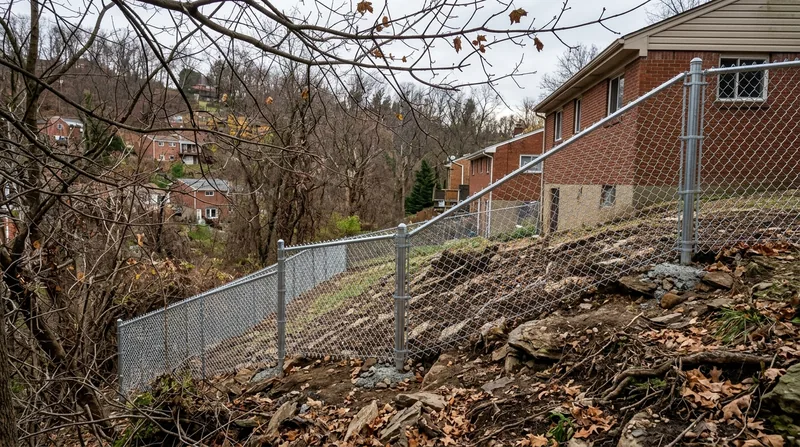




Chain link fence installation in Pittsburgh demands more than standard techniques when your lot sits on the steep, rocky hillsides that define so much of the region. We set posts deep past the shale and sandstone that turns up halfway down most holes in the area, and we step the fence line to follow the slope instead of racking it flat across uneven ground. Chain link performs well here because it flexes with freeze-thaw cycles and sheds water without trapping ice the way solid fencing does. The steel mesh handles Pittsburgh's winter weather, and the open design works on tight urban lots where rowhouses and twin homes sit shoulder-to-shoulder with shared property lines. Since 2012, we have installed and repaired chain link fencing across Pittsburgh and the surrounding communities, working from existing surveys and building on the property lines homeowners identify. A free estimate takes 24 hours to schedule. Call (412) 754-7811 or visit our contact page to get started.
Why Chain Link Fence Installation Matters on Pittsburgh Hillside Lots
Pittsburgh's topography creates unique fencing challenges. Most residential lots slope, and the bedrock that sits 18 to 36 inches down in many neighborhoods means post holes hit shale or sandstone before reaching proper footing depth. Chain link works here because it tolerates the racking and stepping that other materials cannot. The freeze-thaw cycle that lifts shallow posts each winter is the real constraint, not the fence itself, so we set every post below the frost line in concrete. This is the difference between a fence that settles and one that holds.
- Posts are set in concrete at depths that clear the seasonal frost heave cycle across Pittsburgh.
- The fence line steps to follow slope instead of being racked flat, which keeps tension even and prevents sagging.
- Steel mesh handles wet snow and ice without the wood rot or vinyl cracking that comes with heavier materials.
- Open mesh design prevents water and ice from building up on the fence face during winter storms.
These details matter because they are what separates a fence that lasts 15 to 20 years from one that fails in half that time on Pittsburgh terrain.
Local fact: Pittsburgh's freeze-thaw cycle is relentless. Water expands as it freezes in the soil around shallow posts, and frost heave lifts them upward each winter. Posts set below the frost line (typically 42 to 48 inches in this region) stay anchored. This is not optional in Western Pennsylvania.
For more information on how frost depth affects fence durability in our climate, the Allegheny County Department of Economic Development publishes soil and frost data for the region.
How We Install Chain Link Fence in Pittsburgh: Process and Placement
Our installation process starts with marking the fence line from your existing survey or the boundary you identify. We call for a Pennsylvania 811 utility locate to mark underground lines before we dig. Once utilities are marked, we set posts at the correct spacing (typically 5 or 6 feet apart), dig deep enough to clear the frost line, and set each post in concrete. From there, we stretch the mesh and secure it with tension bands and a stretcher bar, ensuring the line stays tight and level across the slope.
- We obtain a Pennsylvania 811 utility locate before any digging begins to protect underground gas, electric, water and sewer lines.
- Posts are dug past bedrock and set in concrete at depths below the frost line to prevent seasonal heave.
- The fence line is stepped to match slope rather than racked flat, keeping tension and appearance uniform.
- Mesh is stretched using a proper stretcher bar and secured with tension bands so it stays tight for years.
- Gates are hung plumb and square, with self-closing and self-latching hardware where requested.
The result is a fence that stands straight through Pittsburgh winters and does not settle or sag as seasons change.
Pittsburgh example: A hillside lot in Baldwin with a 15-foot run and 8-foot drop requires the fence to step down three times to follow the slope. We set posts at the high and low points, then at the transition steps, so each section is level. This keeps the mesh tight and the fence looking finished, not forced.
If you have a steep lot or are unsure how to handle the terrain, our fence repair and consultation page covers assessment and planning for complex installations.
Chain Link Installation Methods: Stepped, Racked, and Specialty Options
| Approach | Description | Best For |
|---|---|---|
| Stepped Installation | Posts set at grade transitions so each fence section runs level, with the fence line dropping in steps down the slope. | Sloped lots across Pittsburgh where the terrain drops more than 2 to 3 feet over a short run. |
| Racked Installation | The top and bottom rails follow the slope continuously, tilting the mesh at an angle so the fence stays tight without stepping. | Gentle slopes under 2 feet of drop, or where stepped appearance is not preferred. |
| Galvanized Steel Mesh | Standard zinc-coated chain link that resists rust and weathers to a dull gray over time, requiring no maintenance. | Most residential installations in Pittsburgh where durability and low cost are priorities. |
| Black Vinyl-Coated Mesh | Galvanized steel wire coated in vinyl for a darker appearance and slight increase in corrosion resistance in coastal or high-salt areas. | Properties where black color is preferred for aesthetics or where winter road salt exposure is heavy. |
| Privacy Slats | Plastic or wood slats woven through the mesh to block sight lines while keeping the structural benefits of chain link. | Urban Pittsburgh lots where neighbors are close and some visual screening is wanted without switching to solid fencing. |
Each method has real advantages on Pittsburgh terrain. Stepped installation is more common here because most residential lots have some slope, and stepping keeps tension and appearance uniform where racking would look unfinished.
Chain Link Fence Installation Cost in Pittsburgh: What to Expect
Chain link fence installation in Pittsburgh starts at $19 per linear foot for standard galvanized mesh on level or gently sloped ground with good access. The price moves up based on several real factors. Stepped installation costs more than racked because it requires more posts and more labor to set them at the right elevations. Black vinyl-coated mesh costs more than plain galvanized steel. Terrain that forces us to dig through shale or sandstone adds time and cost. Tight access, shared property lines that require coordination with neighbors, or lots in areas with strict setback or height rules all affect the final price. A 100-foot run on a Pittsburgh hillside with stepping and some difficult ground can run $2,500 to $3,500 or more.
The best way to know what your fence will cost is to get two or three estimates from installers who have looked at the lot in person. Our estimate is free and comes with no obligation. We respond within 24 hours and can often schedule a site visit within a few days. Call (412) 754-7811 or use our contact page to request an estimate. If you want to see how our pricing compares across different materials and job sizes, visit our full pricing page.
Factors that move the cost up include:
- Stepped installation instead of racked adds labor and material cost because more posts are required.
- Black vinyl-coated mesh or specialty gauges cost more than standard galvanized steel.
- Posts that must be set through shale or sandstone require more time and sometimes specialized drilling equipment.
- Tight urban lots with shared property lines or alley access may require extra coordination or hand-digging.
- Gates, hardware upgrades, and site-specific modifications are priced separately based on scope.
These are the real drivers of price on Pittsburgh terrain. Getting a detailed estimate that breaks out materials, labor, and site-specific work helps you understand what you are paying for.
Chain Link Fence Installation Near Me: What Pittsburgh Homeowners Should Know Before Hiring
Hiring a fence installer in Pittsburgh means checking a few things that matter more than price alone. Insurance and workers' compensation cover are non-negotiable, because if someone is injured on your property, you need to know the work is covered. Ask for a certificate of insurance before work starts. Pennsylvania has no state contractor license for fence work, but projects at or above $5,000 in home improvements per year must be registered with the Pennsylvania Office of Attorney General under HICPA. Fence licensing and registration rules vary by municipality across the Pittsburgh area, so check with your local building department and your HOA or deed restrictions if you live in a master-planned community. Permits are required in some jurisdictions and not others, and height, setback, and material rules differ. A good installer will help you understand what applies to your lot.
When you call for an estimate, ask these questions:
- Are you fully insured with general liability and workers' compensation, and can you provide a certificate of insurance before work starts?
- Do you call for a Pennsylvania 811 utility locate before digging, and do you handle the request or ask the homeowner to do it?
- Will you verify permit requirements with the local building department, or do I need to check separately?
- Do you work from an existing survey, or do I need to hire a land surveyor to establish the property line?
- Can you provide references from recent jobs on similar terrain or in similar neighborhoods?
Getting two or three estimates helps you compare approach, materials, and price. The cheapest bid is not always the best value if it cuts corners on post depth or uses inadequate concrete. On Pittsburgh hillsides, depth and stepping are where quality shows up.
We are fully insured with general liability and workers' compensation cover, and we provide a certificate of insurance on request. We are an AFA Member Installer through the American Fence Association. We have been in business since 2012 and work across Pittsburgh and the surrounding municipalities. Call (412) 754-7811 to discuss your project or visit our contact page to request a free estimate.
Chain Link Fence Installation in Pittsburgh: Pricing Guide
| Service | Price | Details |
|---|---|---|
| Standard Chain Link Installation | Starting at $19/ft | Galvanized steel mesh, level or gently sloped ground, good access, posts set below frost line |
| Stepped Installation on Hillside Lots | Starting at $24/ft | Multiple grade transitions, posts set at slope changes, stepped fence sections, typical for Pittsburgh terrain |
| Black Vinyl-Coated Mesh or Specialty Options | Starting at $22/ft | Darker appearance, added corrosion resistance, privacy slats, or non-standard gauges, material and labor included |
| Complex or Large-Scale Installation | On estimate | Difficult access, bedrock drilling, extensive stepping, multiple gates, or site-specific challenges require on-site assessment |
| Travel and Estimate | Included / Free | No mileage charge within Pittsburgh and surrounding service areas, free estimate with 24-hour response |
Indicative pricing, the exact cost depends on square footage, finish, and site access. Free personalized estimate within 24h at (412) 754-7811.


