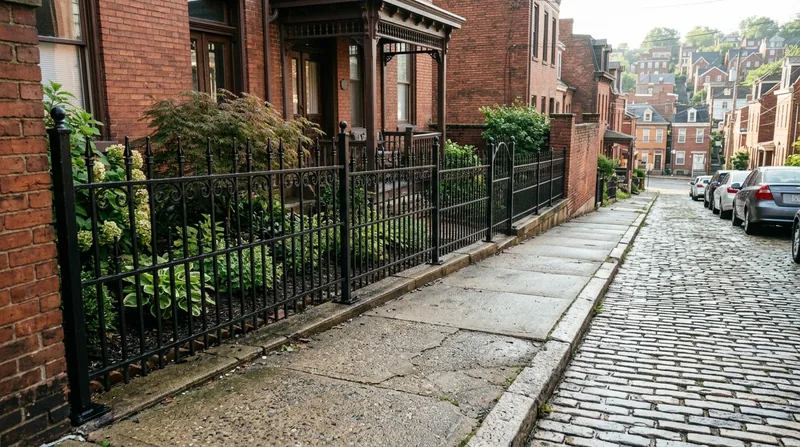




Aluminum fence installation in Pittsburgh requires more than a standard post hole. Our older rowhouse blocks, steep hillsides, and the relentless freeze-thaw cycle that heaves shallow posts every winter make depth and method the real difference between a fence that lasts and one that fails within three seasons. Ornamental iron still lines many of Pittsburgh's brick streets, and aluminum has become the practical choice for homeowners who want the look without the rust and maintenance burden. We set posts below the frost line, drill through shale where bedrock sits close to the surface, and keep panels level along Mount Washington's stepped blocks and narrow side yards. Since 2012, we have installed hundreds of runs across Pittsburgh and the surrounding municipalities, from Dormont to Monroeville, working within the real constraints of the city: alley access, shared fence lines, existing masonry, and the freeze-thaw reality that separates a good installation from a failing one.
Why Aluminum and Ornamental Iron Fencing Matter in Pittsburgh's Residential Landscape
Pittsburgh's older neighborhoods and suburban developments present specific challenges that aluminum and ornamental iron address better than wood or vinyl. The dense rowhouse and twin housing stock of the city gives way to older suburban lots where fence runs are short, shared with immediate neighbors, and frequently sit right on a boundary that predates any modern survey. Ornamental iron carries historical weight in many blocks; aluminum offers the same visual appeal with lower maintenance and no rust concerns in our humid climate.
- Aluminum resists rust and corrosion year-round without paint or stain maintenance.
- Ornamental iron panels can be restored or matched to existing runs along historic streets and rowhouse blocks.
- Both materials remain level and stable when posts are set deep in concrete below the frost line, which is the critical practice in Pittsburgh's climate.
- Aluminum is lighter than wrought iron, making installation faster and reducing labor cost without sacrificing curb appeal.
- Ornamental iron adds architectural character to properties in Sewickley, Squirrel Hill, and other established neighborhoods where period details matter.
The choice between aluminum and ornamental iron depends on your home's age, neighborhood character, and how much maintenance you want to handle. Either way, proper post depth and concrete setting are non-negotiable in Pittsburgh's climate.
Key info: Pittsburgh's frost line sits approximately 3.5 to 4 feet below grade. Posts set shallower than this will heave upward each winter, creating gaps, leaning panels, and loose connections. This is not a cosmetic issue; it is the primary reason fences fail in our region. Concrete footing at proper depth is what separates a 15-year fence from a 3-year one.
For more information on how frost depth affects fence installation, refer to Allegheny County's building and development resources.
How We Install Aluminum and Ornamental Iron Fencing in Pittsburgh: The Process
Installation begins with a site walk to understand the terrain, identify utility lines, and confirm the fence line with the homeowner. Pittsburgh's mixed topography, from flat blocks in Baldwin to steep slopes in Mount Washington, means we adjust our method to the ground. We always perform a Pennsylvania 811 utility locate before digging any post holes, and we work with the local building department to confirm permit requirements and height restrictions, which vary across our service area.
- Schedule a free estimate and walk the property to identify the fence line, measure the run, and note any obstacles such as existing masonry, alley access, or utility lines.
- Call 811 for a utility locate to mark underground gas, electric, water, and communications lines before we break ground.
- Check with your local building department and HOA (if applicable) to confirm height limits, setback rules, and whether a permit is required in your jurisdiction.
- Dig post holes to a depth below the frost line (typically 3.5 to 4 feet in Pittsburgh) and set posts in concrete for stability through the freeze-thaw cycle.
- Attach rails and panels, ensuring they are level and properly spaced, using stainless steel hardware to prevent rust at connection points.
- Inspect the entire run for plumb, level, and secure connections before we call the job complete.
The entire process from estimate to completion typically takes 1 to 3 weeks, depending on the run length, ground conditions, and weather. Winter and early spring are slower because frozen or waterlogged ground makes post setting difficult; spring through fall is our peak season.
Local example: A 120-foot aluminum fence run along a side yard in Brentwood with shale bedrock 18 inches down required drilling through rock and hand-setting posts to proper depth. The job took 4 days and cost more than a standard installation, but the fence is level and will remain so through decades of freeze-thaw cycles. This is why we inspect the site first and explain what the ground will demand.
If you need a professional assessment of your property and a detailed estimate, contact us for a free consultation.
Aluminum vs. Ornamental Iron: Installation Methods and Durability
| Method | Material and Setup | Best for Pittsburgh Properties |
|---|---|---|
| Aluminum panels with powder-coated finish | Lightweight, pre-assembled panels mounted on galvanized steel posts set in concrete. No rust, minimal maintenance. Available in black, bronze, white, and custom colors. | Suburban lots in Dormont, Green Tree, Wilkinsburg, and newer developments where HOA rules allow modern materials and a clean aesthetic is preferred. |
| Wrought iron panels with rust-resistant coating | Heavy, hand-fabricated or factory-assembled panels with ornamental details. Requires periodic touch-up paint to prevent rust. Heavier posts and deeper concrete footing needed. | Historic rowhouse blocks in Pittsburgh, Squirrel Hill, and Sewickley where period character and architectural detail are important to the neighborhood identity. |
| Steel ornamental panels with galvanized or powder-coated finish | Similar to wrought iron in appearance but lighter weight and more rust-resistant when properly finished. Requires concrete footing below frost line and stainless hardware. | Mixed neighborhoods where ornamental appeal is desired but maintenance burden must be lower than traditional wrought iron. |
| Aluminum with decorative ornamental details | Factory-cast or welded aluminum with scrollwork, finials, or picket details. Lightweight, no rust, no paint needed. Premium aesthetic without maintenance. | Properties where homeowners want ornamental character with modern durability. Popular in Baldwin, Castle Shannon, and properties with HOA rules on appearance. |
The table above shows the main installation approaches we use in Pittsburgh. Aluminum is the faster install and costs less upfront; ornamental iron requires more labor but delivers historical authenticity. Both require posts set deep in concrete to survive our freeze-thaw cycle. We recommend aluminum for most residential properties and ornamental iron where the neighborhood character or existing fence lines justify the added maintenance.
Aluminum and Ornamental Iron Fencing Cost in Pittsburgh: What to Expect
The cost of aluminum fence installation in Pittsburgh starts at approximately $46 per linear foot for a standard 4-foot residential run with posts set in concrete below the frost line. Ornamental iron typically ranges from $60 to $120 per linear foot, depending on the complexity of the design and whether the panels are custom-fabricated or factory stock. Several factors move the price up from that starting point.
- Post depth and ground conditions: Digging through shale bedrock or setting posts deeper than standard frost line depth requires drilling and hand labor that increases cost.
- Panel height and style: Taller panels (5 or 6 feet) and ornamental designs with scrollwork or cast details cost more than simple 4-foot runs.
- Access and site logistics: Narrow side yards, alley-only access, or steep slopes in Mount Washington neighborhoods require more crew time and sometimes hand-carrying materials.
- Hardware and finish: Stainless steel hardware, custom paint colors, and rust-resistant coatings add to the material cost but extend the life of the fence in Pittsburgh's humid climate.
- Existing conditions: Removing an old fence, cutting through tree roots, or working around existing masonry increases labor and may require separate removal and disposal fees.
A typical 100-foot aluminum fence run in a Pittsburgh suburban lot with standard soil and no major obstacles costs between $4,600 and $5,500 installed. Ornamental iron for the same run would range from $6,000 to $12,000. We always recommend getting 2 to 3 estimates from local contractors to compare pricing and scope. For a detailed pricing breakdown tailored to your property, review our full pricing overview.
The best way to understand cost for your specific property is a free on-site estimate. Call us at (412) 754-7811, and we will walk the site, measure the run, note any complications, and provide a realistic number within 24 hours.
Aluminum and Ornamental Iron Fencing Near Me: What Pittsburgh Homeowners Should Know When Hiring
Choosing a fence contractor is more than finding someone with a truck and a drill. The contractor you hire will determine whether your fence stands level through 15 winters or leans and fails within 3. When evaluating contractors near Pittsburgh, focus on three areas: insurance and worker safety, understanding how fence work is regulated in Pennsylvania, and the contractor's track record on similar properties in your neighborhood.
Pennsylvania has no state contractor license for fence installation. Fence work is not regulated at the state level the way electrical or plumbing is. However, anyone performing $5,000 or more of home improvements per year in Pennsylvania must register with the Pennsylvania Office of Attorney General under HICPA (Home Improvement Consumer Protection Act). Registration is not a license; it is a record that protects homeowners by requiring written contracts and establishing a complaint process. When you hire a contractor, ask for proof of registration and confirm that your contract includes the contractor's PA HIC registration number.
- Verify that the contractor carries general liability insurance and workers' compensation coverage, and request a certificate of insurance naming you as an additional insured.
- Ask for references from homeowners in your neighborhood or similar properties in Pittsburgh and the surrounding municipalities.
- Confirm that the contractor will call 811 for a utility locate before digging any post holes, as required by Pennsylvania law.
- Check with your local building department or HOA to understand permit requirements, height limits, and setback rules in your jurisdiction, and confirm that the contractor will handle permitting if required.
- Request a written estimate that includes the fence line location, post depth, material specifications, hardware type, and the total price, so there are no surprises when the work begins.
- Ask how the contractor handles site restoration (backfill, cleanup, disposal of old materials) and whether those costs are included in the estimate.
A reputable local contractor will answer all of these questions clearly and provide references without hesitation. If a contractor resists providing insurance documentation, refuses to call 811, or cannot explain why post depth matters in Pittsburgh, move on and call another firm.
We have been installing fences in Pittsburgh since 2012 and are an AFA Member Installer (American Fence Association). We are fully insured with general liability and workers' compensation coverage, and we provide a certificate of insurance on request. Contact us today for a free estimate and see how we approach your property and your fence line.
Aluminum & Ornamental Iron Fencing in Pittsburgh: Pricing Guide
| Service | Price | Details |
|---|---|---|
| Aluminum fence, standard 4-foot height | Starting at $46/ft | Posts set in concrete below frost line, standard panel spacing, galvanized hardware, basic powder-coat finish, includes labor and materials |
| Ornamental iron fence, custom or heritage panels | Starting at $60/ft | Factory or hand-fabricated panels with scrollwork or decorative details, heavier posts, stainless steel hardware, rust-resistant coating, labor for careful alignment |
| Rock drilling or difficult ground conditions | On estimate | Shale bedrock close to surface, dense soil, or slopes require drilling or hand-setting posts deeper, adding specialized labor and equipment cost |
| Old fence removal and site cleanup | On estimate | Depends on run length, material type, and whether debris must be hauled or can be disposed on-site; typically $5 to $15 per linear foot |
| Travel and site inspection | Included | No separate charge for travel within Pittsburgh and surrounding service areas; free site walk and estimate with response within 24 hours |
| Free estimate | No obligation | Call (412) 754-7811 to schedule a walk of your property, measure the run, and receive a detailed written estimate within one business day |
Indicative pricing, the exact cost depends on square footage, finish, and site access. Free personalized estimate within 24h at (412) 754-7811.


