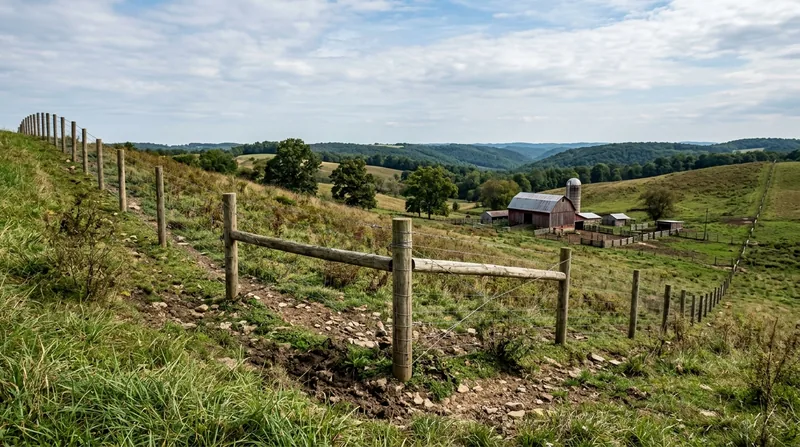




Farm fence installation in Pittsburgh requires more than standard fencing know-how. Properties across the region, from the dense neighborhoods of Pittsburgh to the rolling acreage near Baldwin and Green Tree, face a shared challenge: the freeze-thaw cycle that heaves posts out of the ground each winter if they are not set deep enough. Livestock fencing, split rail installations, and pipe fence systems all demand footings below the frost line, proper bracing at corners to handle animal pressure, and line that follows uneven pasture ground without racking or sagging. We have installed and repaired farm and ranch fencing since 2012, and we understand how clay soil, water runoff, and the Pittsburgh climate affect what holds and what fails. This page covers what farm fencing costs, how we install it to last, and what to expect when you call.
Why Farm & Ranch Fencing Matters in Pittsburgh's Rural and Semi-Rural Areas
Farm and ranch fencing protects livestock, marks property boundaries, and defines pasture zones across Greater Pittsburgh's mix of urban neighborhoods and rural acreage. Unlike residential privacy fencing or decorative ornamental iron, farm fencing must withstand constant pressure from cattle, horses, and sheep, resist seasonal ground movement, and remain functional in terrain that is rarely level. Posts set in shallow footings heave upward in late winter and early spring, creating gaps that livestock exploit. Corners without anti-sag bracing collapse under lateral force. Lines that do not follow the natural fall of the land trap water and rot the base of wood rails and posts.
- Set posts in concrete below the frost line to prevent frost heave and seasonal shifting.
- Install anti-sag bracing and corner bracing to handle livestock pressure and resist lateral movement.
- Run fence line that follows the slope of pasture ground to shed water and avoid pooling.
- Choose materials appropriate to the task: pressure-treated pine, cedar, galvanized pipe, or no-climb horse fencing depending on the animal and the budget.
- Verify utility lines with a Pennsylvania 811 locate before digging any post holes.
Proper farm fencing keeps animals contained, reduces escape and injury risk, and holds its value across seasons of freeze-thaw cycling and livestock stress.
Key info: Pennsylvania law requires a Pennsylvania 811 utility locate before you dig post holes on any property. Call 811 at least three business days before installation. The locate is free and protects you from hitting buried gas, electric, water, or communications lines. Do not skip this step, even on rural acreage.
For more information on utility locates and property line protection, visit the Pennsylvania 811 website.
How We Install Farm & Ranch Fencing in Pittsburgh: Step by Step
Farm fencing installation begins with a site walk to understand the terrain, identify utilities, and assess soil conditions. We measure the fence line, mark post locations, and call for utility locates. We then dig post holes below the frost line (typically 42 to 48 inches in Pittsburgh), set posts in concrete, and install rails or mesh appropriate to your livestock and budget. Every installation is custom because no two properties in Pittsburgh are the same: a sloped pasture in Baldwin requires stepped installation, a level lot in Green Tree may use racked fencing, and a mixed-use property might combine split rail fencing with pipe fence sections.
- Schedule a free site visit to assess terrain, soil, livestock type, and existing utilities.
- Obtain a Pennsylvania 811 utility locate and verify no buried lines cross the fence line.
- Mark post locations on the ground, accounting for slope and natural ground fall.
- Dig post holes below the frost line and set posts in concrete to prevent frost heave.
- Install rails, mesh, or boards appropriate to the animal and the intended use.
- Install anti-sag bracing at corners and at intervals along long runs to resist lateral pressure.
- Inspect the completed fence line for plumb, proper spacing, and secure hardware.
This methodical approach ensures that your farm fence remains sound through multiple seasons of freeze-thaw cycling and livestock pressure.
Local example: A horse property in Brentwood with rolling pasture and clay soil required posts set 48 inches deep with anti-sag bracing every 8 feet along a 150-foot run to handle the animal's weight and the slope of the ground. We used galvanized pipe for the main rails and no-climb mesh to prevent the horse from catching a hoof. The fence has held for four years with no frost heave or sagging. For similar challenges on your property, contact us for a free estimate.
Farm & Ranch Fencing Methods: Choosing the Right System
| Approach | Description | Best for |
|---|---|---|
| Split Rail Fencing | Wood posts and horizontal rails, typically three or four rails per section. Rustic appearance, allows visibility through the fence. | Horses, cattle, and mixed livestock on level to gently sloping ground where aesthetics matter. |
| Pipe Fence Installation | Galvanized steel pipe posts and rails, welded or bolted at corners. Extremely durable, handles rough terrain and livestock pressure. | High-impact areas, steep slopes, and heavy cattle or mixed livestock where wood would not survive the abuse. |
| No-Climb Horse Fencing | Vinyl or galvanized mesh fencing with horizontal rails, designed to prevent hooves from catching. Combines visibility with safety. | Horse properties where injury prevention and durability are the priority. Holds up well in freeze-thaw cycles. |
| Barbed Wire Fencing | Wire strands stretched between posts, typically four to six strands. Low cost, lightweight, effective for cattle containment on established lines. | Cattle ranches, large acreage, and perimeter fencing where initial cost matters more than aesthetics or horse safety. |
| Stepped or Racked Installation | Posts set at the same height but rails installed in steps to follow slope, or boards racked (angled) to match terrain without leaving gaps. | Sloped pasture, uneven ground, and hillside properties where level installation would create gaps livestock could exploit. |
Each method addresses different terrain, livestock type, and budget constraints. We assess your property and recommend the approach that balances durability, cost, and function.
Farm & Ranch Fencing Cost in Pittsburgh: What to Expect
Farm and ranch fencing in Pittsburgh starts at approximately $14 per linear foot for basic split rail or wire fencing on level ground with standard post spacing. Pipe fence, no-climb mesh, and installations on sloped terrain cost more because they require deeper footings, additional bracing, and specialized materials. A 150-foot run of split rail fencing on level ground in Pittsburgh costs roughly $2,100 to $2,400 before permits or site preparation. The same length in pipe fence with anti-sag bracing and corner bracing runs $3,500 to $4,500. Sloped terrain, clay soil that requires extra excavation, livestock pressure points that demand additional bracing, and distance from road access all push the cost upward.
The most important cost factor is post footing depth. Posts set shallow will heave and fail within two to three winters in Pittsburgh's freeze-thaw cycle. Posts set to proper depth in concrete cost more upfront but hold for 15 to 20 years. A cheap installation that requires replacement within five years is never the bargain it appears.
Get detailed pricing for your specific project by submitting a site description or calling for a free on-site estimate. We provide a written quote that breaks down material, labor, and any site-specific costs so you know exactly what you are paying for.
Farm & Ranch Fencing Near Me: What Pittsburgh Homeowners Should Know Before Hiring
Hiring a farm fencing contractor in Pittsburgh means verifying insurance, understanding how fence work is regulated in Pennsylvania, and confirming that the installer has experience with freeze-thaw footing and livestock pressure. Pennsylvania has no state contractor license for fence installation. Work valued at $5,000 or more per year in home improvements may trigger HICPA registration requirements, but the responsibility lies with the contractor. Ask any contractor for proof of general liability and workers compensation insurance, and request a certificate of insurance before work begins. Get multiple estimates from installers who have completed similar projects in your area.
Check references from customers in Pittsburgh, Mount Oliver, Dormont, and Baldwin. Ask whether their fences have held through multiple winters and whether the contractor has returned to fix frost-heave issues or sagging sections. Understand your local setback and height rules by contacting the municipal building department in your jurisdiction. Some properties sit in HOA communities with architectural guidelines that restrict material, color, or height. Confirm these rules before ordering materials. If your property borders a neighbor, clarify who pays for the fence and what the local fence line law requires. Pennsylvania law places this responsibility on both property owners to negotiate, and a surveyor can determine the exact boundary if there is a dispute.
Call us at (412) 754-7811 for a free estimate. We respond within 24 hours and provide a written quote with no obligation to book. We have installed farm and ranch fencing since 2012 and hold membership in the American Fence Association (AFA).
Farm & Ranch Fencing in Pittsburgh: Pricing Guide
| Service | Price | Details |
|---|---|---|
| Split Rail Fencing | Starting at $14/ft | Three-rail cedar or pressure-treated installation on level ground, posts set in concrete below frost line, standard 8-foot post spacing included |
| Pipe Fence Installation | Starting at $24/ft | Galvanized steel pipe posts and rails, anti-sag bracing at corners, suitable for steep slopes and high livestock pressure in Pittsburgh clay soil |
| No-Climb Horse Fencing | Starting at $18/ft | Vinyl or galvanized mesh with horizontal rails, prevents hoof injury, durable through freeze-thaw cycles, ideal for horse properties in Pittsburgh region |
| Barbed Wire Fencing | Starting at $8/ft | Four to six wire strands on posts set in concrete, lowest-cost option for cattle containment and perimeter fencing on large acreage |
| Sloped or Stepped Installation | On estimate | Terrain-following fence on hillside or uneven pasture requires custom post placement, additional bracing, and stepped or racked rails to prevent gaps |
| Free Estimate | No cost or obligation | Site visit, terrain assessment, material recommendations, and written quote within 24 hours at (412) 754-7811 |
Indicative pricing, the exact cost depends on square footage, finish, and site access. Free personalized estimate within 24h at (412) 754-7811.


